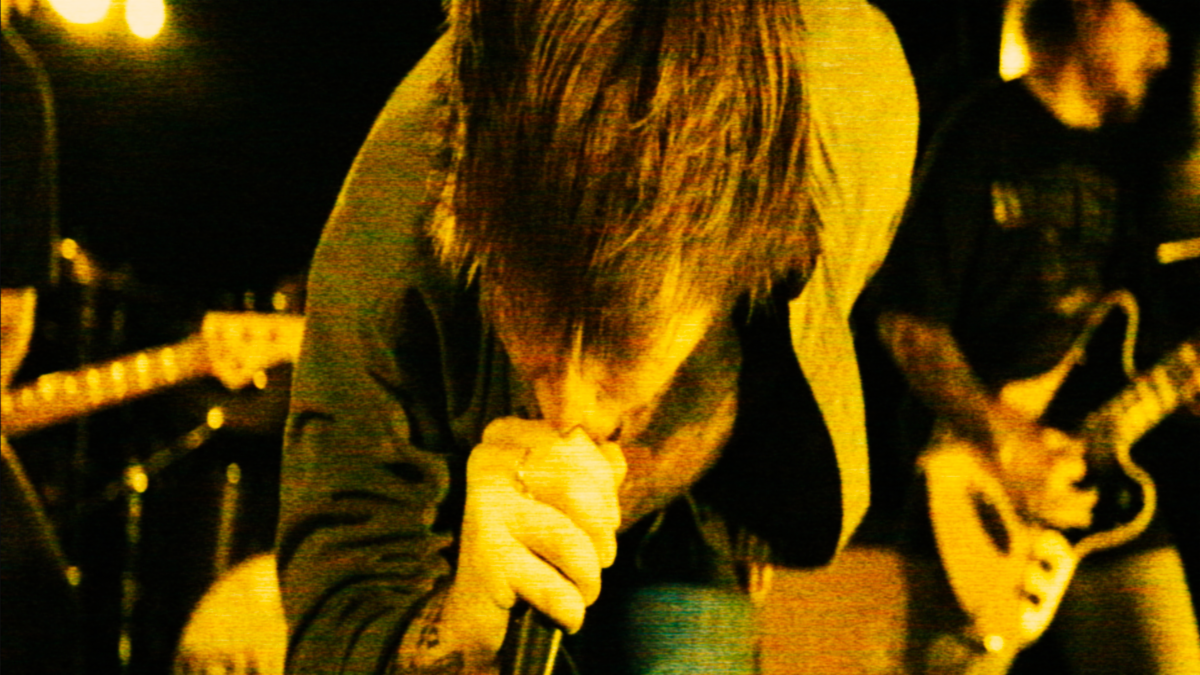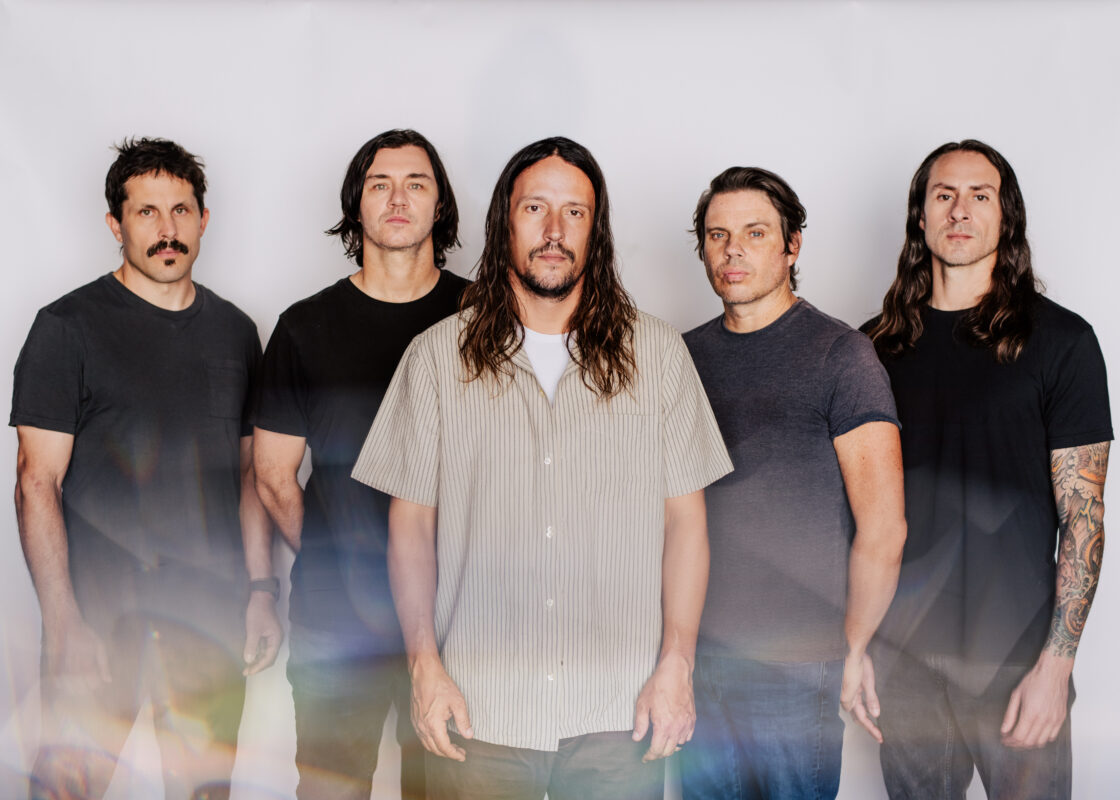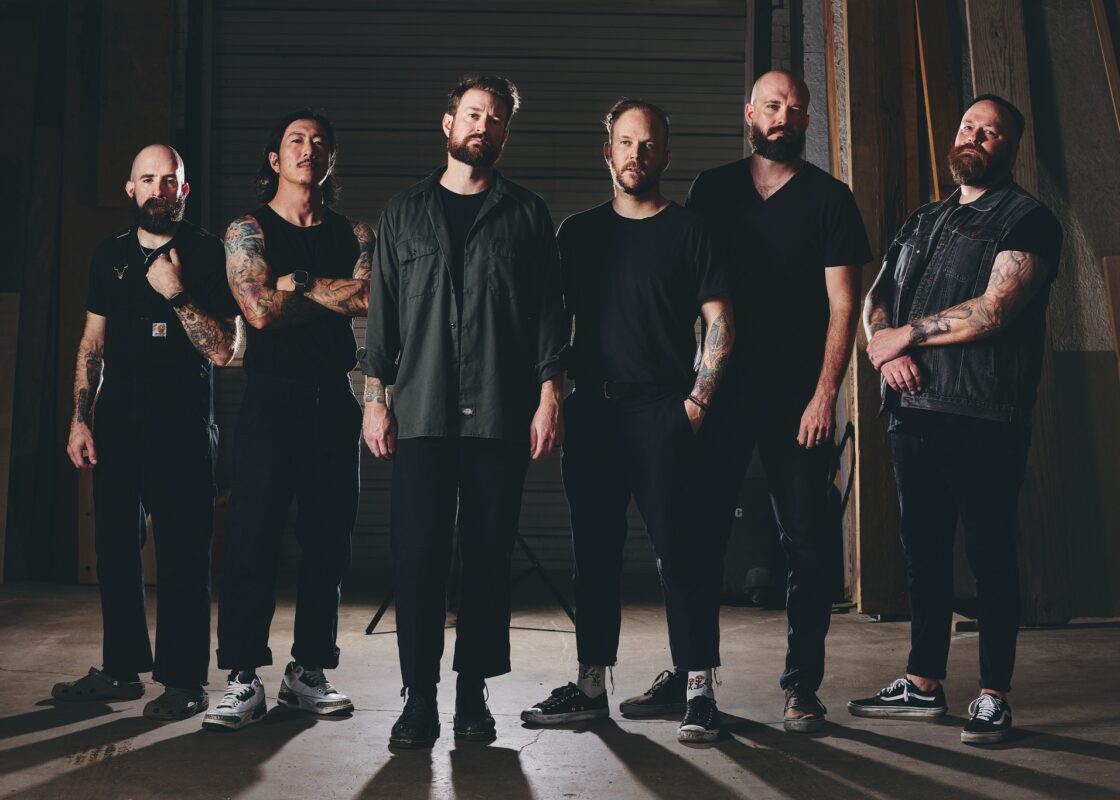
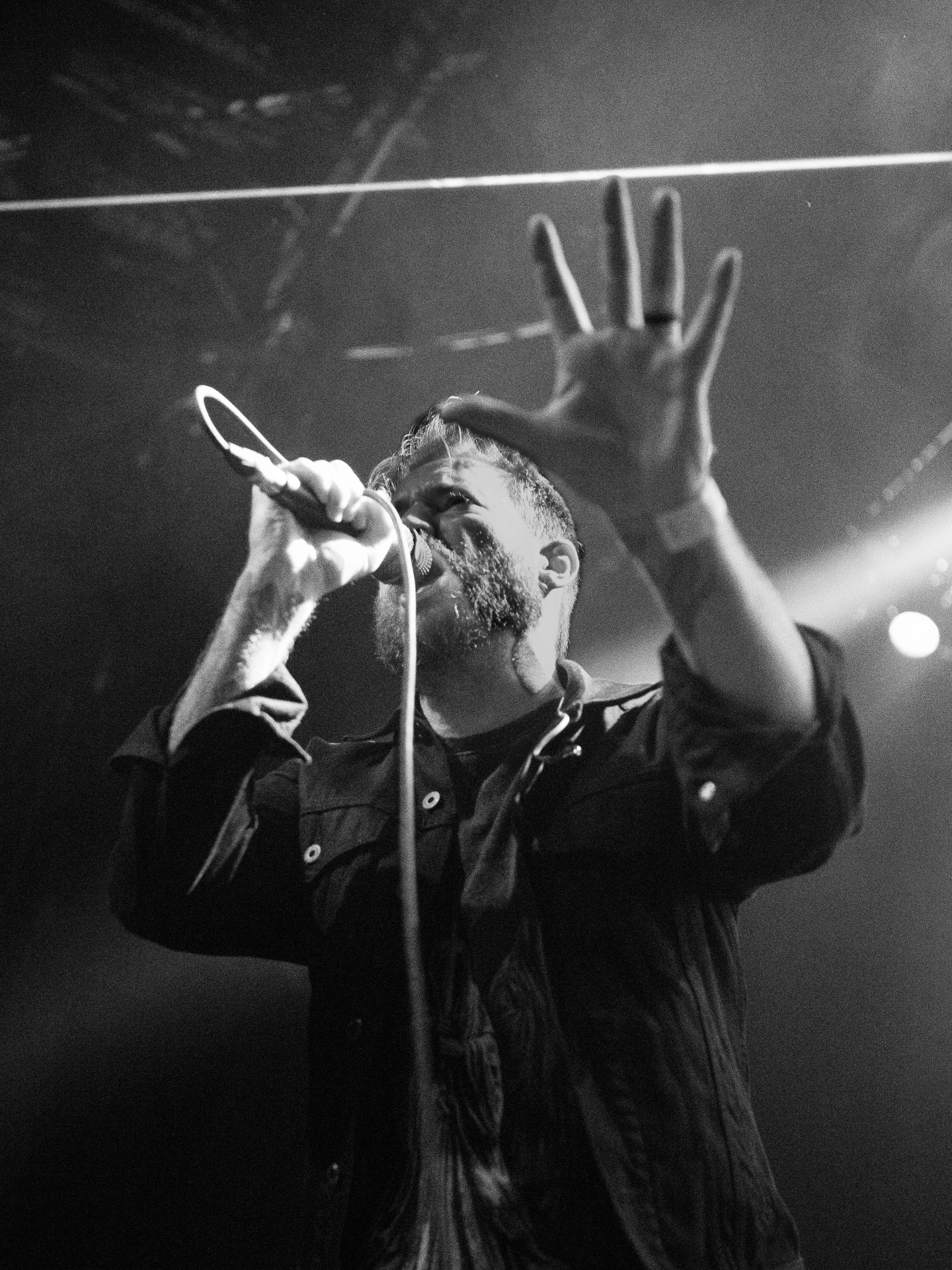
In 2023, Haste the Day took the stage at Furnace Fest without expectations. What they gave was an epic performance many felt lucky to experience again, and what they received in return was more than a warm welcome home from their fans. It was also a reminder of what their music and their brotherhood meant to them as artists, who were first music-lovers themselves, who were first just beloved human beings with an innate aptitude to create art and understand the world. Lifelong listeners came out of the woodwork to relive the days and the music that formed them, healed them, and gave them a place to belong, and the energy that erupted was enough to reignite the band.
Now, a few years later, we sit down with frontman Stephen Keech to talk about the band’s legacy, the process of individual becoming that led to their reunion, their new album, and what it means for the current state of Haste the Day.
He shared graciously about his journey with music and with faith, reminisced on what it was like in the golden age of metalcore, and articulated how it’s kept alive today through the people who are committed to making music with soul. We talked about the new record: the potent story that drives it, the production, and how leaving the noise in and getting friends in a loud room to play together preserved their unique “HTD” energy. And we talked about how where they came from shaped who they are.
For everything that has changed in the world and in the music scene, what hasn’t changed about Haste the Day is their passion for people and community. The band is ever-grounded in love and acceptance, and their time away has only refined their appreciation for their fans and for each other. Their new music holds such a balance of old and new life, and we have no doubt that whatever comes next will be infused by and written from inside the community they helped build for all these years.
Thanks for being here! Before we jump in, I’d really like to know what you’re listening to right now…
That’s probably not the answer you’re going to be looking for [laughs]. I listen to a lot of film scores. My job is to score films and TV and commercials and stuff like that, so I’m listening to a lot of instrumental music. Also, I just find that I’m so busy these days, I need some time to think, so a lot of times I just need something in the background.
Some of my favorite stuff…I listen to a lot of Max Richter, which I’m excited about because I’m going to see him live this summer. He just did the score for Hamnet, which I have not seen, but I’ve listened to the score a few times and it’s beautiful. A lot of Jóhann Jóhannsson. I’m sad that he’s gone, but his music is just some of my favorite ever. He’s got an album called Orphée that’s just unbelievable.
If I listen to anything heavy, it’s going to be something that I listened to when I was in high school or even middle school, like Zao. I was showing my kids — I’ve got a four year old and a seven year old — on the way to school the other day. I was showing them Where Blood and Fire Bring Rest.
Yep, that’s the one to show them. Very cool, thanks for sharing that. I love getting a peek into people’s headspace, their ear space. Before we talk about the new record, I want to go all the way back to when you joined Haste the Day. At the time, did you think that you were coming in to preserve something, or to reinvent or reimagine it? And looking back, what do you think you actually did?
I think my intent was to preserve something because I was a fan. I didn’t want to change anything necessarily. Their intent was a little different. They wanted me to come in and do my own thing and make it my own as much as I could. So it took a year or so before I really felt more comfortable doing things that were my own.
Even when it came down to doing the vocals on Pressure the Hinges, I felt like I should probably do more of the “Jimmy” thing and do a high scream like that. And they’re like, “No, do your lows, do your low stuff, that’s what we want.” And so I did, and they encouraged me to sing a lot more. I was coming in fully knowing that Jimmy was the screamer. I was hoping that I could sing more, but I didn’t want to impose my voice. This was already an established band.
So, it was maybe around Dreamer when I really started feeling like I had a creative stake, and when I really started to try to make it my own and have a little bit more involvement in that area.
What had you done musically before that?
I was in a band in the Denver local scene called New Day Awakening. Dave, Haste the Day’s guitar player now, was in that band with me. We started that back when I was in ninth grade and played as much as possible. We played through all four years of high school and got really connected to the Denver scene. It was us and a band called Texas is the Reason, and Every Day at Sinai. We were always playing every weekend together. Even Drop Dead Gorgeous was a part of that for a while.
No way! I love me some Drop Dead Gorgeous. And they’re back now…super exciting.
Yeah. They actually used to come into the Chick-fil-A that I worked at and ask me how to get shows. We put them on maybe one of their first or second shows early on, and then all of a sudden they were massive.
That’s awesome. And speaking of making the scene, Haste the Day fans are loyal. Some of the most loyal I’ve seen. What do you think makes that true, at least for you guys?
Well, first off, Haste the Day is like a community. I feel like we see the same people at all of our shows, especially since we got back together. But it really was that way before too, when we were touring full time.
I think we just always made a point to connect with people. It was more than just a fan-band relationship. We’d go out to the floor every time we were headlining, we’d be at the merch table, just talking to people and hanging out and sharing stories. I think it’s just one of those things where it was always a big deal for us to stay connected. And that was one of the driving factors in coming back — just being a part of that again.
One of the things that blew us away about Furnace Fest was that those same people never went away. They kept listening, and we didn’t know that they were still around, but they came back and showed up. It was great to reconnect with them.
Furnace Fest, that was 2023, right? Was that the ignition that made you all decide to get back to it in a more serious way?
Yeah, they finally gave us an offer that got us out of retirement. They did that with a lot of bands, but they made us this offer and we’re like, “Well, we’ve gotta do it.” So we had a bunch of hard conversations, because it takes a lot to lay it down. That’s as much of an undertaking as starting a band — putting it down and finding out who you are outside of it.
So we did a lot of work, and the question was: do we want to open this door again? We really had to question whether or not it was worth it to pick it back up. Eventually we all decided that we were all strong enough in our own individual identities to be able to pick this up again without it ruling our lives, or without undoing all the work that we’d done over the years to find ourselves outside of the band.
And we are so glad we did, because when we got to Furnace Fest, I mean, we were staying at this Airbnb and we went back, and we’re all nervous because it had been so long since we played, and we’re a lot older now. We were talking about how we were playing last, on the last night, and probably a lot of people were going to leave. So we thought if the shed stage is like half full, we’ll be stoked…if it’s even a third full, we’ll be stoked. And we got there and it was completely packed all the way to the back.
One of the things that blew us away about Furnace Fest was that those same people never went away. They kept listening, and we didn’t know that they were still around, but they came back and showed up. It was great to reconnect with them.
To me, it felt like we were playing the encore stages at Cornerstone at midnight. I remember seeing Norma Jean do one when they first changed their name, and Zao, and it was just manic. That’s what it felt like. Just that kind of energy.
I saw y’all years ago in St. Louis at a venue that’s closed now on the Delmar loop. My friend’s band was the local opening for you, but they had car trouble, so you guys ended up playing before them, and we still talk about it. It was such a good show. Anyway, that’s not a question, just a fun memory.
Oh wow! Yeah, yeah, that’s awesome.
What do you personally miss about the scene from those earlier days?
I think it was more of a subculture than it is now. The genre of metalcore has definitely reached almost a pop level of popularity. There’s something about the people it attracted back then — you didn’t fit in anywhere else in life, but you’d come to these shows and you felt at home. You felt like, finally, you’re around your people, people who understand you.
I remember feeling that way specifically about Cornerstone. I’d show up and I’d never seen that many people who were like-minded to me. I felt alone in my school. My first Cornerstone was eighth grade, and until then I didn’t even know there were other people out there like me and my sister who listened to that kind of music. So seeing everybody in one place was just incredible. The energy was kinetic. You could feel it in everybody.
I live in Nashville now, and it’s strange, because you go to a show here and everybody’s so oversaturated with music that they just kind of stand there and watch. And I mean, that’s how I go to shows now too. I stand…
By the board where it sounds good?
By the board where it sounds good! I cross my arms, I try to lean on something, and then I try to find somewhere to sit down when it’s over.
I think it has changed. And I really loved Furnace Fest for bringing that back, because I really felt that kinetic energy there. I mean, everybody’s older, and they brought their kids, and I had my kids there. It was really special to be able to share that with them.
I bet. And I think there’s something around that — I’d love your perspective on this… I don’t love the term “Christian music” in general, but that’s a whole other conversation.
Oh yeah, we could talk about that forever…
Right? But I guess, the faith-based, “Christian” metalcore scene, to me, was another subculture within all of that.
Yeah.
And it seems to have died down or at least taken a different shape. I think the arts reflect what’s happening in culture, and it’s not to say that faith is dying per se, but it’s definitely changing as everyone’s grown up and identified their own wounds and remade it for themselves. So if you’re willing to share your experience, I’d love to know your thoughts on the industry that was, or is, quote unquote, “Christian metal?”
Man, okay, we’re about to open Pandora’s box here…
Let’s do it.
So, first off, I should say that I am forever grateful for the Christian music scene back then, like early Tooth and Nail, Facedown Records. Again, it made me feel like I was on the inside instead of the outside, and that was really cool. There was so much energy and excitement around that kind of music at the time, whether you were seeing a Huntingtons show in an old mall in a tiny room that sells video games, or in an actual theater. I saw so many shows and listened to so many records that really helped me find myself — as a Christian, as a human, as someone who liked things that weren’t necessarily on the surface. I am grateful for that.
However, just like anything, there’s a machine behind it. The corporate machine is going to pump until it gets that money. And what that bred was a whole generation of bands that felt like they couldn’t be real. If they weren’t a Christian, they couldn’t say it. It was this ‘Don’t Ask, Don’t Tell’ situation. So, you had a bunch of people who were kind of forced to live these fake public lives, and if you were brave enough not to, you were ostracized and shamed.
My main problem with that is that we treated these young kids — from 18 to maybe 25, most of us were young — like theologians or clergy, like they were actually a ministry. Which, I mean, it’s a business. We’re all in the business of music, or else we can’t do this. Chad Johnson did come around for a while and really tried to change that paradigm and create a donation-based label, which was really cool, and Chad’s a great guy. But it’s tough to fight the machine.
And it’s not even just the music machine, it’s the business of religion behind it.
Yes. I’ve told this story a couple times and I’ll keep telling it. I learned more about Jesus from the bands we toured with that were not Christian than I did from the bands we toured with that were. That’s a broad statement and there’s nuance to it, but…we toured with From Autumn to Ashes. Great band, super cool to tour with. We even had a split seven-inch vinyl with them.
So we’re playing in Dallas at a Christian venue, and From Autumn to Ashes is notoriously not a Christian band. It’s a freak snowstorm, getting really cold. I walk out of the venue to get something to eat, and there’s a homeless man sitting right outside the door, freezing cold. I walk right past him. I go get my food, I come back, and you know what I see? I see Fran from From Autumn to Ashes giving this man hot soup, giving him a hoodie and some other clothes and gloves and whatever he had on him that he could give this man.
And that same night, parents were boycotting From Autumn to Ashes merch because they weren’t Christian. And I’m just like, “Guys, look at this. Look at their hearts. It’s not all as simple as you want it to be.”
I learned a pretty valuable lesson that night, and many more throughout my touring days, just realizing that the world isn’t as black and white as I thought it was. And the Christian music industry is going to try to tell you that it is.
I am really glad to see that it’s not as huge these days. A band can just be a band, be Christians, and sing about whatever they want to sing about. They can just be themselves and release the music they want to release. I mean, even with some of these new songs, we still get comments, like one the other day we were laughing about. Somebody said, “This is soft, you guys need to praise God hard.” And it’s like, we’re singing about something that’s extremely important to us and extremely deep and is so involved in spirituality, and you’re missing the forest for the trees because we didn’t say “Praise Jesus” in it. I don’t know why you’d expect that from us…
You’re not worship leaders.
We’ve never been a worship band. We have Christian lyrics, but yeah. I am glad to see that the reign of the “Christian music” machine is at least slowing down.
I learned a pretty valuable lesson that night, and many more throughout my touring days, just realizing that the world isn’t as black and white as I thought it was.
I hear that from a lot of bands I’ve gotten to talk to over the years. A lot of them have just had their own journeys. I’m a huge Underøath fan, and watching them come back was so emotional for me because I think Spencer in particular had every right to be so, so angry and he didn’t show up that way.
Yeah, that’s great.
He just showed up as him. They were artists first, and they were coming back as artists. They make music because they have to. A lot of the Christian bands would come and make music as an evangelical tool, and that’s great and fine, but that’s just one way to engage with music. It’s not the whole picture. I think it’s just unrealistic for fans or any listener to expect human beings to be static and serve a purpose without their own human journey involved.
Absolutely. And that was a discussion we had when deciding to come back. We did take the “Christian metalcore” label out of our bio because we’re all on different spiritual journeys. We don’t all believe the same thing. But we do come together under the banner of love and acceptance and inclusion. That’s what we want to spread at our shows, and to me, that’s being a Christian.
It was definitely a hurdle to get over, though, when we were talking about it. There’s this guilt, almost, where you’re like, “Oh, I can’t just do this because it’s fun and I’m an artist and it’s fulfilling. That’s selfish. I need to do it for God. It’s a ministry.” But it’s like, that is not how God called us to live default. It is, but you know, say you’re a mechanic and you’re a Christian. You’re not a Christian mechanic. You’re not a Christian plumber. You’re a Christian person…
…who happens to be a plumber.
Yes. And you can share love and be kind and be Christ to people in that place. But you’re also there to do a service [laughs]. So yeah, freeing ourselves of this pressure to fulfill some type of duty to minister. I’m not a minister. But I will love people. I will talk to people after the show if they’re having a hard time, and I will do my best to be Christ to people, and I fail a lot of times with that. And that’s okay.
We’re a band, and we make art. Art is there to be able to ask questions and to meditate on what those answers might be. It’s not there to give you answers. And once you start giving answers through art, you have a Christian movie, which we can all agree most Christian movies suck, because it’s just an agenda. You can smell it from the very beginning, and the only people who enjoy those movies are the people who already share that agenda. That’s the wrong approach.
And it just stays in the inner circle. There’s no real art to it.
Exactly. Alright, I’m done with my rant.
[Laughs] Well thank you for humoring that one. I know it’s such a huge question. I have my own journey with it, too, within music and then within HM, separately. Anyway, when I ask people, they’re either really exhausted by it, or they’re…not burdened…but it’s just heavy for them. So I appreciate you answering it.
It is heavy. But I also don’t like complaining about something without trying to do something about it. You know what I mean? So, I still don’t know what it is we can do about it, other than put out the best art we can and ask real questions and be totally ourselves.
Yes, I was going to say, I think you’re already doing exactly what you can and should do about it. Alright, last question before we jump into the album stuff. What does Haste the Day mean to you now that you’ve lived outside of it?
I think it’s a brotherhood, really, when you boil it all down. The real reason we’re all doing this is because we want to hang out with each other, we want to explore making music again, and have the excuse to text each other on a weekly basis or whatever.
There is the Haste the Day legacy, which is super cool and fun to be a part of and exciting, but it’s not always easy. The thing that keeps us going is that brotherhood. We’ve got these shows coming up, and we’re all so excited to just be in a room together, because we all live in different states, spread out all over the U.S. Just having a reason to get together in one place and make music together is just awesome.
We’re a band, and we make art. Art is there to be able to ask questions and to meditate on what those answers might be. It’s not there to give you answers.
Mixed with that is the community at these shows. We’re actually about to launch a Patreon page, because we want to have a central place for this community. We don’t get to play shows like we used to; we can play maybe five to ten shows a year. We don’t want to let this community fade away. We want to be a part of it, and we want anyone who wants to be a part of it to be a part of it and to continue that on.
So yeah, it’s really just a lot about people. And it is a plus to be able to make music that we love and put out art that truly matters to us, and ask those questions, and hopefully those questions resonate with other people and maybe help people come to some conclusions.
Yes, absolutely. Well, that’s a good segue into to the new album… I got a little pre-listen, and I’m really stoked to see what people think, especially those die-hard fans, because it’s truly great. There are definitely some themes, musically and conceptually, and a story that creates this through line. How did the composition of the whole album come together? Was the story set out from the beginning, or did it kind of surface song by song?
It surfaced over time. It took us two years from start to finish to make this record, and I wrote lyrics throughout that whole time. The first song that I did was “Burn,” because we had to release that first. I was really struggling with what to write about because my day-to-day life is kids and baseball games and kids’ parties. It’s not very metal [laughs].
I read a lot of Brandon Sanderson — fantasy, sci-fi fantasy. He’s really prolific, and he’s got this whole world he calls the Cosmere, where all these books are different stories at different times, but they all take place in this big universe. I really admire how he tells stories, and I started playing around in my mind with this dystopian world.
Alongside that, our current world is completely a mess. It’s stressful and exhausting. I had no idea how to put those feelings to paper until I started thinking about this story. It’s a bit of a bleak story. The protagonist is in a dystopian society where the world is ending, and in order to create stability, the government is clamping down and authoritarianism rises. All voices of dissent are silenced, which leads to an extremely angry rebellion. That’s what “Burn” is about. And that leads to realizing that even in fighting this, violence begets violence, and war begets war. It’s a vicious cycle. Throughout the entire record there’s this theme of these cycles.
Eventually the protagonist realizes that neither the rebellion nor the authoritarian government are doing it for him, and he ends up speaking out against both and gets banished into the wilderness alone. As he explores these philosophical ideas and seeks some new life before the end of the world, he’s doing a deep self-reflection. That’s where a song like “Adrift” lives — within the story. It’s him losing himself, questioning what he thought he stood for. That song actually started with lyrics written by our guitar player, Dave, as a therapy exercise, expressing what it’s like to be adopted. That’s why it’s such a beautiful song to me, because I’ve known Dave for so long.
The whole record ends with “Oblivion,” where the character is mourning the memory of the ones he loves, knowing it’s all about to come to an end. I always envisioned it like a storm just taking him. And then it ends with a beautiful string outro. You think it’s all over, and then there’s a swell. You hear the siren again that you heard at the very beginning, but in reverse, and it leads right back into the start of the album. If you play it on repeat, it’s a circle, because the cycles didn’t end.
Is it your personal philosophy that these human cycles are inevitable and inescapable?
I hope not [laughs]. I don’t know, remains to be seen, I guess. My hope is that they are escapable. And again, like we talked about with the Christian thing — although I’d be considered a heretic by some Christian circles, hence the song, “Heretic” — I do believe in the teachings of Jesus, and I have hope for the kingdom of heaven. I think we kind of see it sometimes on this earth. I don’t know what the answer is necessarily, but I do hope that we can end these cycles of war and power grabs and live peacefully and love one another and see each other as human beings instead of as enemies. That’s a great world. It’s not the world we live in right now, but I can hope.
You also produced this one, right? What is it like to balance the writer, performer, and producer hats? Do you feel limited by those hats, or does it set you free?
It sets me free, for sure. It’s really a reflection of my progression musically. The band broke up in 2011, I worked in a restaurant for a few years while trying to figure out what I was doing, ended up interning at a studio and realizing I just wanted to be in the studio all the time. So I stayed. I did my internship, and then I started a studio with my friend Matt Hoops, who’s in Relient K, and we produced a bunch of bands together. I also started getting into film music at the same time.
The producer chair became my instrument as much as, or more than, any of the instruments I play or my voice. That’s where I feel the most alive and the most able to contribute. I’ve been in the place a few times where I was just playing an instrument on a record, and it’s fun and easy and whatever, but it just feels like, “Cool, got my part down, see you later.” The producer role is much more involved. It’s art for me.
How do you capture that energy when everyone is remote and spread out? There’s just an unmatched energy that comes from being in a room together jamming.
We’re extremely lucky to have some excellent players. One gripe I have with metal and metalcore production, maybe starting around 2009, 2010, is that everything became over-edited. Everything is so perfectly tight to the grid, all the transients are the same level, and it’s just like, you might as well make it in MIDI. And a lot of it is done on the computer. I’ve even talked to some bands about producing and they say, “Yeah, we’re just gonna program the drums.” And I’m like, “No, you’re not.” I’m not opposed to programmed drums — I do it all the time in my film work — but it doesn’t set it to the level of ‘done’ for me.
We’re very lucky to have Scotty and Giuseppe and Mike on drums and everyone in the band who is able to record in a way that preserves that energy. When you put it all together, you feel it. On this record, the guitars aren’t perfectly edited to the grid; it’s Scotty playing, you can hear Scotty playing. It’s perfect because he’s such a good guitar player, but I tried really hard not to suck any of the energy out of it. Giuseppe is such a tight player already and writes really high-energy parts. It really feels like us, even though we don’t have time to go into a studio and jam all together.
I think the last record done that way was Pressure the Hinges, just because of how Garth Richardson, who produced that one, liked to work. We didn’t have the luxury of doing that this time, although that would have been awesome. But it still turned out being ‘us.’
I’ve never been able to communicate clearly with producers or musician friends about this, but I want the music to be… not unkempt, but messy in the most human, chaotic way. Not wrong, not off, just chaos.
Yeah, it’s real. When you have a guitar plugged in and you let go of the string, there’s stuff that happens in there that should be there. And of course we had to use the technology available to us. All the guitars were done through a Quad Cortex, which was weird for us, because I love mic’ing up amps. But it’s just not realistic when you’re working over a two-year period to mic up an amp every time, and I didn’t want to blast my family in my home studio. The Quad Cortex sounds really good and sounds the same every time you plug in. We also used STL Tonehub, and all of our guitar tone was done through that. It is weird for me to admit, because it’s just not something I’ve ever done before. But the guitar tones on this record are sick, and it sounds real, it feels real. And the fact that the performances are real helps.
Is there a moment on the record that surprised you in the finished product?
Yes — the entire song “Gnasher.” As we were creating the album, most songs start either with Scotty demoing in his studio in California or me demoing in mine, and then we share it and send tracks back and forth. We’re getting close to being done with the record, about to track drums, getting Giuseppe out for a few days, and Scotty has a list of things he’s supposed to be doing to finish the album. But every time he’d get into his studio to work through the list, he’d get a burst of inspiration and just pump out a new song instead [laughs]. This happened so many times.
One of the last ones we got was “Gnasher,” and I was so overwhelmed at that point. I was washing dishes, listening to a podcast, and I get a notification on my phone. It’s a new song from Scotty. He just says, “Whoops.” And it’s “Gnasher.” I refused to like it at first, because I was like, “Scotty, we are finishing the album. We are almost done. I am so overextended right now.” And he was just like, “Sorry.”
We’re very lucky to have Scotty and Giuseppe and Mike on drums and everyone in the band who is able to record in a way that preserves that energy. When you put it all together, you feel it.
So I wasn’t sold on it. We all voted to do it, but I still wasn’t there yet. And then when Giuseppe came out to track drums, we were sitting at my kitchen table the night before, listening through everything and setting tempos. And he had this idea…a Finch song popped in his head, and he thought, “That drum beat over this riff.” I was like, “That could work.” And we recorded it, and it opens the song, and all of a sudden it just transformed. It had been a cool thing before, but it didn’t feel like Haste the Day yet. It wasn’t giving me that spark. And then as soon as that drum beat went on, I was almost jumping up and down. “This is it, let’s go!”
That song turned out so cool, and it became kind of a cornerstone of the record, because that’s where the dissenter is proclaimed. I am really stoked that Scotty had his insanely inconvenient bouts of inspiration [laughs].
Which song feels the best to play or perform?
“Adrift,” hands down. That’s my favorite. Screaming is fun, but it’s not second nature for me; singing is a lot more natural. And I’m a very chill person. I listen to film scores and instrumental music. So the vibe of that song just feels more like me. I’ve been practicing these songs for the live shows, and that one is my favorite to do. I get really excited when we get to that point in the set.
You’ve had some collaborations lately. Garrett Russell is on your record, and you were a guest on Idle Threat’s new record. Can you talk about the community behind all that collaboration?
Nashville is a great center for it. A lot of bands just keep moving here. I moved here in 2010, and that was a big boom time for our scene, but I’d been out of it for a while just living my normal life, not going to shows much. Getting back together with Haste the Day kind of got me out there again.
I had done some work with Idle Threat in the past — I mixed one of their songs back around 2016. When they wanted to do their sophomore release, they asked if I wanted to be a part of it. I hadn’t done artist production in a while since I’d been doing orchestral and film score work, so I was hesitant, but they sent me the songs and I was like, “Yeah, let’s do it.”
They also had Garrett on a track, and he’s in Nashville too, so that reconnected us. A few years ago we’d done a Brooklyn show together, and Brennan, our guitar player, is close with the Silent Planet guys, so we’ve done random things with them over the years. Reconnecting with Garrett was really cool. He’s such a kind, loving person and a really talented vocalist. So it was kind of a no-brainer to ask him to come do one on ours, too. He actually came up to Hendersonville where I live because he had two other bands wanting guest spots, and I had one for him while he was here, too.
What do you hope to leave with this community through this record?
I hope it’s a cathartic thing for people. The lyrics and music on this record are really important to me because I was able to express my feelings of frustration — frustration with the church, frustration with government, frustration with things that I think a lot of people are feeling. To bottle those feelings up and have no way to express them is not healthy.
I just hope this is a cathartic thing for people who might be going through that, whether you’re a Christian who’s gone through some deconstruction, or you’re bummed out by what you see going on in the world, or you’re angry about anything. Honestly, whatever your political stance is, everybody’s got something to be angry about right now. I think this record can speak to that anger and be a cathartic listen.
I do believe in the teachings of Jesus, and I have hope for the kingdom of heaven. I think we kind of see it sometimes on this earth. I don’t know what the answer is necessarily, but I do hope that we can end these cycles of war and power grabs and live peacefully and love one another and see each other as human beings instead of as enemies. That’s a great world. It’s not the world we live in right now, but I can hope.
How can your fans stay in touch with what’s going on in Haste the Day?
Go to hastetheday.com and sign up for our mailing list. That’s the best way for us to tell you about what we’re doing, because if you go to Instagram you won’t see our posts, and if you go to Facebook you definitely won’t see our posts. Come straight to the source. Sign up for the email list.